

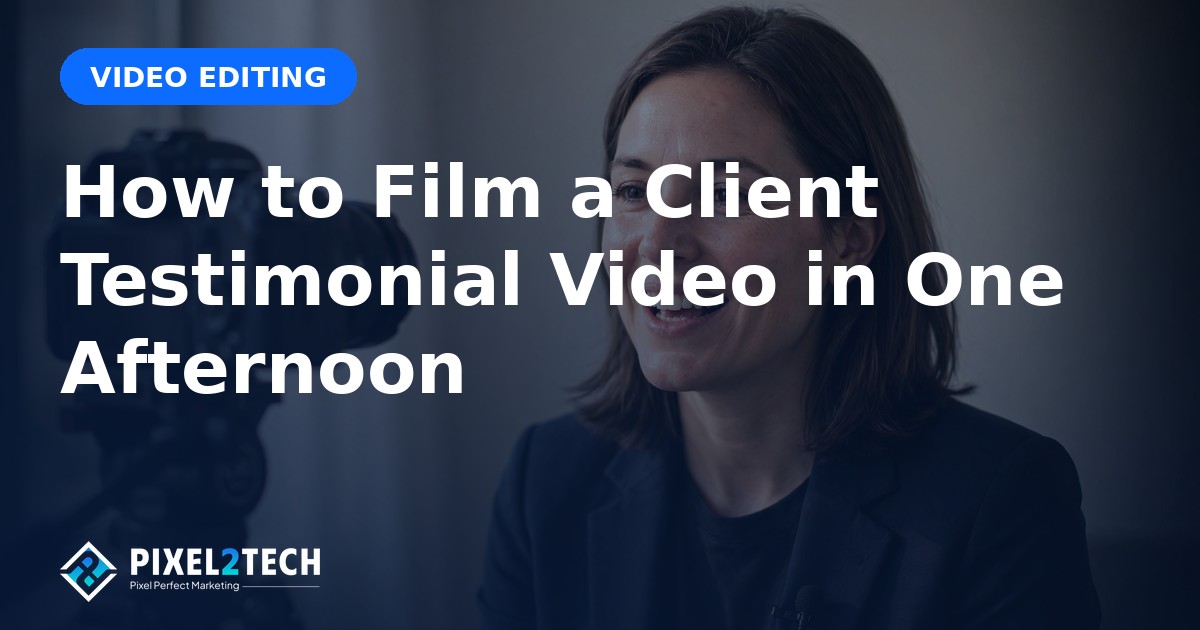
How to Film a Client Testimonial Video in One Afternoon
A practical plan for filming a client testimonial video in one afternoon: the questions to ask, the setup to keep simple, and the edits that turn one interview into useful clips.
- Written by Asad Farooq
- Topic: Video Editing
- Published
- 3 min read
Key takeaways
- A client speaking in their own words carries more weight than any claim a business makes about itself.
- Pick a client with a specific result and a clear story: the problem, the choice, the experience, and the outcome.
- Ask short, open questions and share them with the client in advance.
- Clean sound matters more than camera quality, so keep the setup simple.
- Plan the edit before filming so one interview yields a full video and short clips.
- Agree use in writing before publishing, then place the video where buyers make decisions.
In this article (7 sections)
Why testimonials work better than claims
A business can say it is reliable, friendly and easy to work with. Every business says that. A client saying the same things, in their own words, carries far more weight. Testimonial videos work because they show a real person, a real problem and a real result.
The good news is that a strong testimonial does not need a large production. One afternoon, one willing client and a simple plan are enough to produce a video you can use for months.
Choose the right client and the right story
Pick a client who can speak clearly about a specific result, not just a client who likes you. The best testimonial stories follow a simple shape:
1. The problem they had before they found you
2. Why they chose you over other options
3. What the work was like in practice
4. What changed for their business afterwards
Ask your client to think about one concrete example before filming day. A specific story about a launch, a booking increase or a problem solved is far more convincing than general praise. If a client is nervous, tell them there is no script to memorise. You only need honest answers to a few questions.
Keep the questions short and open
Prepare five or six questions in advance, and share them with the client so nothing feels like a surprise. Good questions include:
- What problem were you trying to solve when you found us?
- What made you choose us?
- What was it like working with the team day to day?
- What result mattered most to you?
- Would you recommend us, and to whom?
Avoid questions that invite a yes or no answer. "Did you like working with us?" produces a short, flat answer. "What was working with us actually like?" produces a story. Listen for the sentences that sound natural, and let the client finish before moving on.
Set up simply, and record clean sound
For a one afternoon shoot, simplicity wins. Film in a quiet room with soft, natural light facing the client, not behind them. A plain background keeps attention on the person speaking. A phone on a tripod, or a basic camera, is enough if the sound is clean.
Sound matters more than camera quality. Viewers forgive an ordinary picture, but they leave quickly when they cannot hear clearly. Use a small lapel microphone or a phone placed close to the speaker as a backup recorder. Record a few seconds of room silence too, so the editor can smooth out background noise.
Film each answer as a separate take, and leave a short pause before and after each answer. Those pauses make editing much easier. If a sentence goes wrong, simply ask the client to repeat it. Nobody will know, and the final video will sound natural.
Plan the edit before you film
A single interview can produce several useful pieces if you plan for it:
- One full testimonial video, around sixty to ninety seconds long
- Two or three short clips, each making one point, for social media
- A captioned version, since many people watch without sound
Tell your editor which result or quote matters most, so the strongest moment opens the video. The first few seconds decide whether a viewer keeps watching. Start with the result, not with an introduction.
Add captions to every version. Captions help viewers who watch silently, and they help people who prefer to read along. Keep on screen text short. The client should be the focus, not a wall of words.
Get permission in writing, and use the video well
Before you publish, agree in writing how the video will be used: on your website, in ads, and on social media. Confirm the client's name, business and job title as they want them shown. A short written agreement protects both sides and avoids awkward requests to remove a video later.
Once published, place the testimonial where buyers make decisions: on the relevant service page, near the enquiry form, and in follow up emails to new leads. A testimonial hidden on a rarely visited page does little work. The same video, placed where a buyer is deciding, does a great deal.
One afternoon is enough, if the story is clear
You do not need a studio, a script or a large crew to make a testimonial video that sells. You need a real client, a clear story, clean sound, and an edit that starts with the result. Film one this month, and you will have proof that no claim on your website can match.
About the author: Asad Farooq
Co-Founder & CPO
Pixel2Tech is a Lahore studio for brand, web, video and automation work. We write about problems we see in client projects.
More about AsadTurn one afternoon into a testimonial that sells
Pixel2Tech edits testimonial, explainer and ad videos for service businesses, turning simple interviews into polished clips for websites, social media and paid campaigns. If you have raw footage, or a client willing to talk, a one afternoon shoot is a practical place to start.
Related articles
Video Editing ·
How to Brief a Video Editor So the First Cut Is Close to Final
Most video revisions come from a brief that missed the audience, the job of the video and the must keep moments. A clear brief, with examples and limits, gets the first cut much closer to final.
Video Editing ·
After Effects Skills for Reels: Learn Motion Before More Presets
A practical learning sequence for cleaner reels: composition, keyframes, timing, typography, masks, reusable controls and a careful export review.

Video Editing ·
Short-Form Content Strategy: Give Every Clip One Useful Job
Plan short-form content around customer questions, useful proof and a clear next step. Build a repeatable brief and review the right signals.
Video Editing ·
Reels vs Long-Form Video: Choose the Job Before the Format
Use short clips for focused moments and longer videos for deeper explanation. Choose by the audience question, evidence needed and next action.
Related Pixel2Tech services
Get new articles by email
Leave your email and we'll send new posts when they're published.